

What Are As-Built Documentation Services?
Construction projects rarely end exactly as they were initially designed. During the construction process, modifications occur because of site conditions, engineering requirements, material availability, safety considerations, and client requests. This is where As-Built Documentation Services become essential. These services involve capturing and documenting the final constructed condition of a building, infrastructure asset, or industrial facility. The resulting records provide an accurate representation of what actually exists on-site rather than what was originally planned.
As-built documentation serves as the foundation for future maintenance, renovation, expansion, and facility management activities. Imagine purchasing a complex machine without an instruction manual. Managing a building without accurate as-built records creates a similar challenge. Facility managers, architects, engineers, and contractors depend on these documents to understand building layouts, structural systems, and mechanical installations. Without reliable documentation, even minor renovation projects can become expensive and time-consuming due to uncertainty about existing conditions.
Today, modern documentation services utilize advanced technologies such as 3D laser scanning, Building Information Modeling (BIM), drones, and digital surveying tools. These technologies significantly improve accuracy while reducing project timelines. Organizations across commercial, industrial, healthcare, educational, and government sectors increasingly recognize the importance of maintaining accurate as-built records to support efficient building operations throughout the asset lifecycle.
Understanding As-Built Drawings
As-built drawings are revised versions of original construction drawings that reflect all changes made during the construction process. They include updates to dimensions, layouts, materials, equipment locations, utility routes, and structural elements. These drawings provide a clear picture of the final completed project and become the official record of the built environment.
Unlike design drawings, which represent intended construction, as-built drawings document reality. Every modification, whether large or small, is carefully recorded to ensure accuracy. This distinction is crucial because future projects depend on knowing exactly what exists on-site rather than what was initially planned.
Why Documentation Changes During Construction
Construction is dynamic. Unexpected site conditions, design revisions, regulatory requirements, and operational considerations frequently result in changes. Contractors may need to reroute utilities, adjust structural components, or modify layouts to address unforeseen circumstances.
These modifications are necessary for project success but can create challenges if they are not properly documented. As-built documentation ensures every change is captured, creating a reliable reference for future decision-making and reducing uncertainty for stakeholders.
Importance of As-Built Documentation in Modern Construction
Accurate documentation has become increasingly valuable as buildings grow more complex and technologically advanced. Modern facilities contain intricate mechanical, electrical, plumbing, and communication systems that require precise records for ongoing operation and maintenance. Without proper documentation, locating hidden infrastructure can become a costly and disruptive process.
Facility managers rely heavily on as-built records to plan maintenance activities, troubleshoot issues, and manage building assets efficiently. When equipment fails or upgrades are required, accurate documentation enables teams to identify system locations quickly and make informed decisions. This reduces downtime and improves operational performance.
Another major benefit is supporting compliance and safety initiatives. Regulatory inspections, insurance assessments, and emergency response planning often require detailed building information. As-built documentation provides a trustworthy source of information that helps organizations demonstrate compliance and maintain safe operating environments. In many cases, the investment in professional documentation services pays for itself through reduced maintenance costs, improved efficiency, and lower project risks.
Supporting Facility Management
Facility managers are responsible for maintaining building performance over many years. Accurate records simplify maintenance planning, asset tracking, and system upgrades. They also help reduce the time needed to locate equipment and infrastructure during repairs.
Improving Future Renovations
Renovation projects often encounter delays because existing building conditions are unknown. As-built documentation eliminates guesswork and provides designers with accurate information before planning begins. This improves project outcomes and reduces costly surprises.
Key Components of As-Built Documentation
Comprehensive as-built documentation covers multiple building systems and disciplines. The goal is to provide a complete record of the asset’s final condition. Each component plays an important role in helping stakeholders understand and manage the facility effectively.
| Documentation Type | Purpose |
| Architectural | Building layouts, room dimensions, doors, windows |
| Structural | Columns, beams, foundations, load-bearing elements |
| MEP | Mechanical, electrical, and plumbing systems |
| Fire Protection | Sprinklers, alarms, safety equipment |
| Utilities | Underground and above-ground utility networks |
Architectural Documentation
Architectural documentation includes floor plans, elevations, sections, and room layouts. These records help stakeholders understand building configurations and support space planning initiatives.
Structural Documentation
Structural records identify the location and specifications of critical load-bearing components. Engineers use this information when evaluating building modifications or conducting structural assessments.
MEP Documentation
Mechanical, electrical, and plumbing systems represent some of the most complex building elements. Accurate MEP documentation supports maintenance, troubleshooting, and future system upgrades.
How As-Built Documentation Is Created
Creating accurate documentation requires a combination of field data collection, quality control, and digital modeling. The process begins with capturing existing conditions using specialized surveying equipment and progresses through data processing and drawing production.
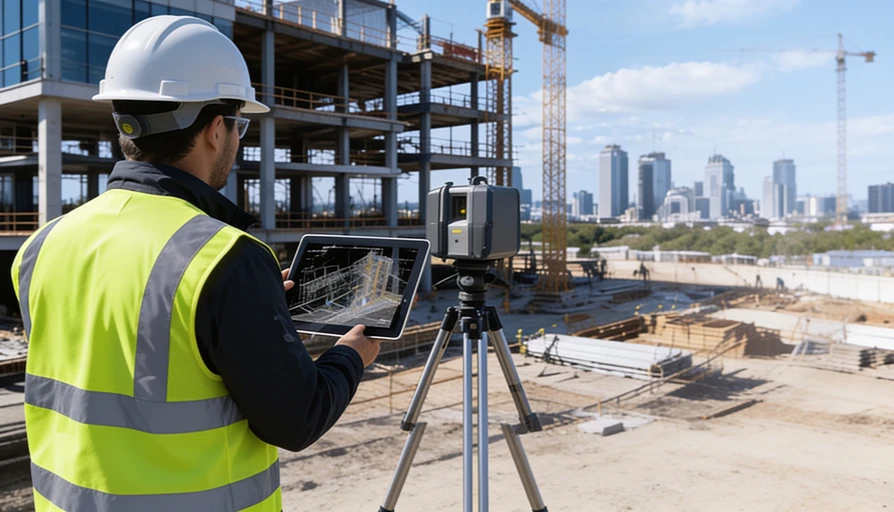
Modern projects increasingly rely on 3D laser scanning because it provides highly accurate measurements and detailed spatial information. Laser scanners capture millions of data points, creating a digital representation known as a point cloud. This data serves as the foundation for developing as-built drawings and BIM models.
Traditional measurement methods are still used for smaller projects but often require more time and carry a higher risk of human error. Digital workflows improve efficiency and enable teams to deliver more detailed documentation. Once data collection is complete, CAD technicians and BIM specialists create final deliverables that accurately represent existing conditions.
Laser Scanning Technology
Laser scanning offers exceptional precision and speed. Large facilities can be documented quickly while minimizing disruption to operations. The resulting datasets support multiple deliverables, including drawings, BIM models, and digital twins.
Traditional Measurement Methods
Traditional surveys rely on manual measurements and field observations. While effective for small projects, they may not provide the level of detail required for complex facilities.
CAD and BIM Modeling
CAD drawings remain a standard deliverable, but BIM models are becoming increasingly popular. BIM provides intelligent digital representations that support facility management, maintenance planning, and future construction projects.
Benefits of Professional As-Built Documentation Services
Organizations that invest in professional documentation services gain significant advantages throughout the lifecycle of their assets. Accurate records improve decision-making, reduce project risks, and support efficient operations. They also provide a reliable foundation for digital transformation initiatives such as BIM implementation and digital twin development.
One of the most important benefits is risk reduction. Construction and renovation projects often face unexpected challenges due to incomplete information. Accurate as-built records minimize uncertainty and help project teams identify potential issues before work begins. This proactive approach reduces delays, change orders, and budget overruns.
Professional documentation also improves collaboration among architects, engineers, contractors, and facility managers. Everyone works from the same reliable dataset, which enhances communication and project coordination. As organizations increasingly adopt data-driven strategies, accurate building information becomes a valuable asset that supports long-term operational success.
Accuracy and Risk Reduction
Reliable information reduces uncertainty and improves project planning. Teams can make better decisions based on verified building conditions rather than assumptions.
Cost Savings and Operational Efficiency
Accurate documentation reduces maintenance costs, improves productivity, and supports efficient asset management. Organizations often realize significant savings over the lifespan of their facilities.
Industries That Require As-Built Documentation
Many industries depend on accurate building information to support operations and compliance requirements. Commercial buildings use documentation for tenant improvements and facility management. Industrial facilities rely on precise records to manage complex equipment and production environments.
Healthcare facilities require detailed documentation because of their sophisticated infrastructure and strict regulatory requirements. Educational institutions use as-built records to plan campus expansions and maintain aging facilities. Government agencies, airports, transportation hubs, and utility providers also benefit from accurate documentation.
As buildings become smarter and more connected, the demand for high-quality documentation continues to grow. Organizations increasingly view accurate building information as a strategic asset rather than a simple project deliverable.
Commercial Buildings
Office complexes, retail centers, and mixed-use developments use documentation to support operations and future renovations.
Industrial Facilities
Manufacturing plants, warehouses, and processing facilities require accurate records for safety, maintenance, and expansion planning.
Healthcare and Educational Institutions
Hospitals, universities, and schools depend on detailed documentation to manage complex facilities efficiently.
Choosing the Right As-Built Documentation Provider
Selecting the right provider can significantly impact project outcomes. Organizations should evaluate potential partners based on experience, technology capabilities, quality assurance processes, and industry expertise. Providers with advanced laser scanning and BIM capabilities are often better equipped to handle complex projects.
It is also important to review sample deliverables and confirm that documentation standards align with project requirements. A reliable provider should offer clear communication, accurate timelines, and comprehensive quality control procedures. The ability to deliver multiple formats, including CAD drawings, BIM models, and point cloud data, adds flexibility and long-term value.
Companies should prioritize providers that understand their specific industry requirements. Industrial facilities, healthcare environments, and commercial properties each present unique challenges that require specialized knowledge. Partnering with an experienced documentation provider ensures accurate results and maximizes the value of the investment.
Experience and Technology
Choose providers with proven expertise and access to advanced technologies such as laser scanning and BIM.
Deliverables and Quality Standards
Review sample projects and verify quality control procedures before making a decision.
Conclusion
As-Built Documentation Services play a critical role in modern construction, facility management, and asset lifecycle planning. By accurately capturing existing conditions, these services provide a reliable foundation for maintenance, renovations, compliance activities, and future development projects. Advanced technologies such as 3D laser scanning and BIM have transformed the documentation process, enabling organizations to achieve higher levels of accuracy and efficiency than ever before.
Whether managing a commercial building, industrial facility, healthcare institution, or educational campus, accurate documentation delivers long-term value. It reduces risk, improves decision-making, and supports operational excellence. As the construction industry continues embracing digital transformation, comprehensive as-built documentation will remain an essential component of successful asset management strategies.
FAQs
1. What is the purpose of as-built documentation?
As-built documentation records the final constructed condition of a building or facility, providing accurate information for maintenance, renovations, and future planning.
2. How accurate are laser-scanned as-built drawings?
Laser scanning can achieve millimeter-level accuracy, making it one of the most precise methods available for documenting existing conditions.
3. What industries benefit most from as-built documentation?
Commercial real estate, industrial manufacturing, healthcare, education, transportation, and government sectors all benefit significantly from accurate documentation.
4. What is the difference between as-built drawings and BIM models?
As-built drawings are 2D representations of existing conditions, while BIM models provide intelligent 3D digital representations containing detailed building information.
5. How often should facilities update their as-built documentation?
Documentation should be updated whenever significant renovations, expansions, or system modifications occur to maintain accuracy.
